Western NC Acreage Value in 2026: What to Know
Real Estate, Western North Carolina Land, Acreage Value
How Much Is My Western North Carolina Acreage Worth in 2026?
If you own land in the mountains of Western North Carolina, you may be wondering whether now is the right time to sell and, more importantly, what your acreage is really worth in today’s NC land market. With prices shifting from the frantic pandemic boom to a more balanced pace, understanding acreage value has never been more important for landowners, investors, and families planning their next move.
The Big Question: How Much Is My Western North Carolina Acreage Worth?
There is no one-size-fits-all answer, but current data gives a clear starting point. As of mid‑2026, typical Western North Carolina land values range roughly from $10,000 to $60,000 per acre for mountain and recreational tracts, depending on location, access, views, and development potential (cinchhomebuyers.com). In Buncombe County specifically, recent rural sales show a median price per acre around $26,224, with some small, highly desirable parcels near Asheville selling for far more on a per‑acre basis (reelvest.com).
On the lower end, more remote agricultural tracts in North Carolina can fall closer to $3,000–$5,000 per acre, following statewide farmland averages (matamount.com). But premium mountain view lots, parcels near ski corridors, or land close to popular towns like Asheville, Hendersonville, or Brevard can command well above the regional median. This wide spread is why a thoughtful property valuation is essential before you list or negotiate.
Western North Carolina Land: Why Location Matters So Much
Western North Carolina land is anything but uniform. Two tracts with the same number of acres can have dramatically different values. When buyers and appraisers look at acreage in Buncombe, Haywood, Henderson, Transylvania, or surrounding counties, they focus on a few core elements that shape acreage value:
Proximity to thriving towns: Land within a reasonable drive of Asheville, Hendersonville, or Brevard typically carries a premium because of access to jobs, healthcare, and amenities. The broader Asheville region’s median home price around $415,000 highlights the strength of the overall real estate prices in the area (canopyrealtors.com).
Topography and usability: Gentle slopes, usable ridgelines, and multiple building sites raise acreage value. Steep, rocky, or landlocked parcels usually sit at the lower end of the NC land market range.
Road access and utilities: Existing driveways, paved or maintained roads, and access to power, wells, or community water make a property far more attractive to buyers and can significantly boost pricing per acre.
Views, water, and recreation: Long‑range mountain views, river or creek frontage, and proximity to trails or public lands are classic value drivers for Western North Carolina land.
Understanding Acreage Value vs. Home Values Around You
It’s tempting to look at nearby home sales and assume your acreage should follow the same pattern. While surrounding real estate prices do influence land, the relationship is indirect. In Buncombe County, for example, the median home sale price sits near $499,000 with a median listing price closer to $617,000 (redfin.com; realtor.com). Yet raw land in the same county can range from modest agricultural pricing to extremely high per‑acre numbers for small, build‑ready lots.
Think of it this way: home values tell you how desirable a general area is and what buyers are willing to pay to live there. Acreage value then layers on the specific characteristics of your land—access, views, zoning, utilities, and development potential. A knowledgeable agent or appraiser will use both housing and land data to anchor a realistic price range for your property.
How Land Appraisal Works in Western North Carolina
A professional land appraisal is one of the most reliable ways to understand what your acreage is worth. In Western North Carolina, appraisers and county assessors typically rely on three main approaches, blended as needed:
Sales comparison: Looking at recent sales of similar parcels—size, location, access, and features—and adjusting for differences. This is the cornerstone of most private land appraisals and county tax valuations.
Cost approach: Estimating what it would cost to create a similar property today, including infrastructure like roads, grading, and utilities, then adjusting for market realities.
Income approach (when applicable): For income‑producing land—such as rental cabins, RV parks, or certain types of farmland—the appraiser may factor in potential earnings.
Counties like Buncombe use mass appraisal techniques and detailed schedules of values to keep assessments consistent across thousands of parcels (buncombenc.gov). Private firms, including specialists who work extensively in the mountains and even use tools like drones, provide more tailored opinions of value for unique tracts, conservation easements, or complex topography (ncappraisal.com).
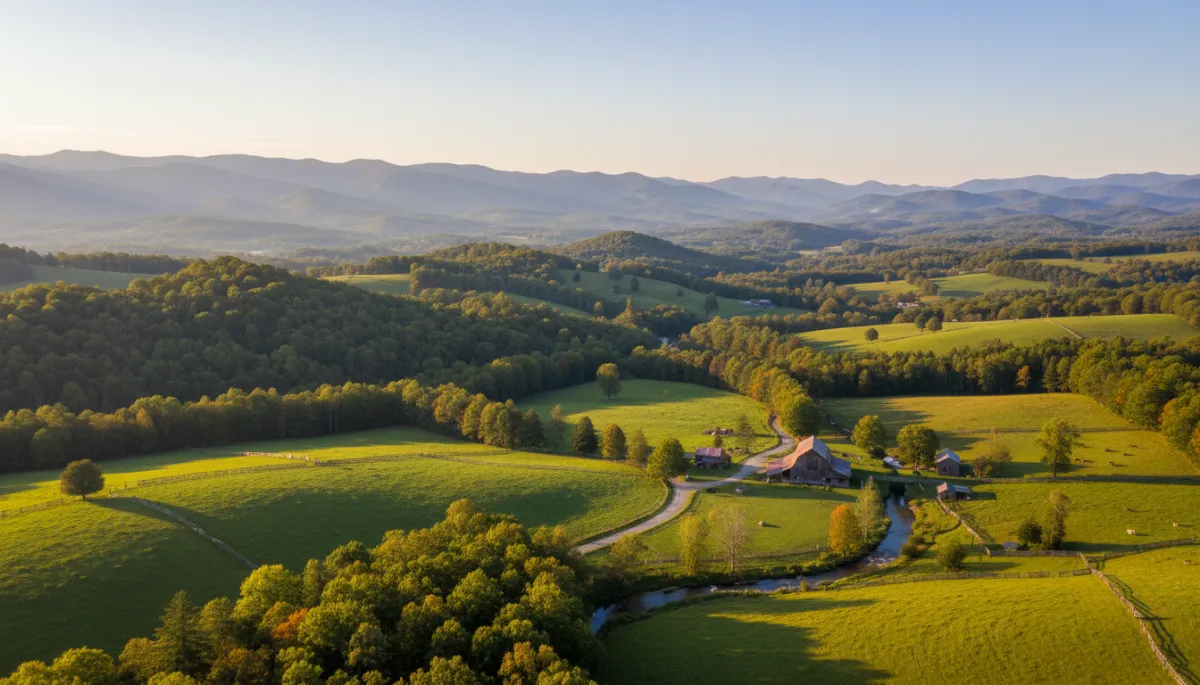
Gentle slopes, road access, and views can easily double or triple per‑acre pricing.
Current NC Land Market Trends: 2026 Snapshot
After several years of rapid appreciation, the 2026 NC land market is settling into a more balanced rhythm. Inventory has increased, and both homes and land are spending longer on the market, giving buyers more negotiating power and putting pressure on sellers to price accurately (coryhelpsyoumove.com).
At the same time, strong demand remains for unrestricted Western North Carolina land with good access, buildable terrain, and attractive surroundings. Parcels that check these boxes still trade within the $10,000–$60,000 per acre band, and in some micro‑markets, even higher. By contrast, steep, landlocked, or heavily restricted tracts may linger unless priced aggressively at the lower end of the range (cinchhomebuyers.com).
💡 Pro Tip: In today’s more balanced market, accurate pricing matters more than ever. Overpricing your acreage based on yesterday’s headlines can mean months of extra holding costs and missed buyers.
Property Valuation vs. Tax Assessment: Don’t Confuse the Two
Many landowners look at their county tax bill and assume that number reflects what buyers would pay. In reality, your tax assessment is just one piece of the property valuation puzzle. North Carolina requires counties to reappraise property at least every eight years, and many—including Buncombe—aim for shorter cycles (buncombenc.gov).
The most recent reappraisals captured several years of appreciation at once, with some Western North Carolina parcels seeing assessed values jump 50–70% (lapelintel.com). Recent legislation, such as Senate Bill 889, temporarily delays the full impact of these new values on property taxes in certain counties (ncleg.gov). But even if your tax bill hasn’t changed dramatically yet, your true market value may have risen substantially—and that’s what matters to buyers.
Practical Steps to Estimate Your Western North Carolina Acreage Value
Gather the basics: Acreage size, road frontage, access points, topographic maps, zoning, restrictions, and any improvements (driveways, clearing, utilities, fencing).
Study comparable land sales: Look for recent, arm’s‑length sales of similar Western North Carolina land in your county or neighboring areas. Focus on per‑acre pricing and adjust up or down for quality, access, and views.
Consider highest and best use: Is your property best suited for a private homestead, short‑term rentals, subdivision, agriculture, or recreation? The likely use heavily influences what buyers will pay.
Talk to local experts: A land‑focused real estate agent or certified appraiser who works regularly in the NC land market can blend data with on‑the‑ground insight, especially in tricky mountain terrain.
When a Professional Land Appraisal Is Worth the Investment
For some owners, a rough estimate based on comparable sales and agent input is enough. But in many cases—large tracts, estates, partnership buyouts, conservation easements, or potential development—ordering a formal land appraisal makes sense. A well‑documented appraisal can support pricing, negotiations, loans, tax planning, and even legal matters.
Given the wide range of Western North Carolina land values, the cost of an appraisal is often small compared to the risk of underpricing a premium tract or chasing away buyers with an unrealistic figure. An experienced appraiser will walk your property, study access and topography, analyze recent sales, and deliver a clear, defensible opinion of value tailored to your acreage.
Final Thoughts: Turning Land Knowledge into Smart Decisions
Western North Carolina acreage is a scarce and valuable resource, whether you own a small homesite outside Brevard or hundreds of acres in Madison County. In today’s more balanced 2026 market, the best outcomes go to owners who understand their land’s true potential, price strategically, and lean on accurate property valuation instead of guesswork.
By combining current NC land market data, local sales trends, and a clear-eyed assessment of your property’s strengths and limitations, you can answer the question, “How much is my Western North Carolina acreage worth?” with confidence—and make informed choices about whether to sell, hold, or improve your land for the next chapter.